Future of Humanity & AI
Interactive Essay · WebAn essay on AI's possible futures, disguised as an operating system you browse.
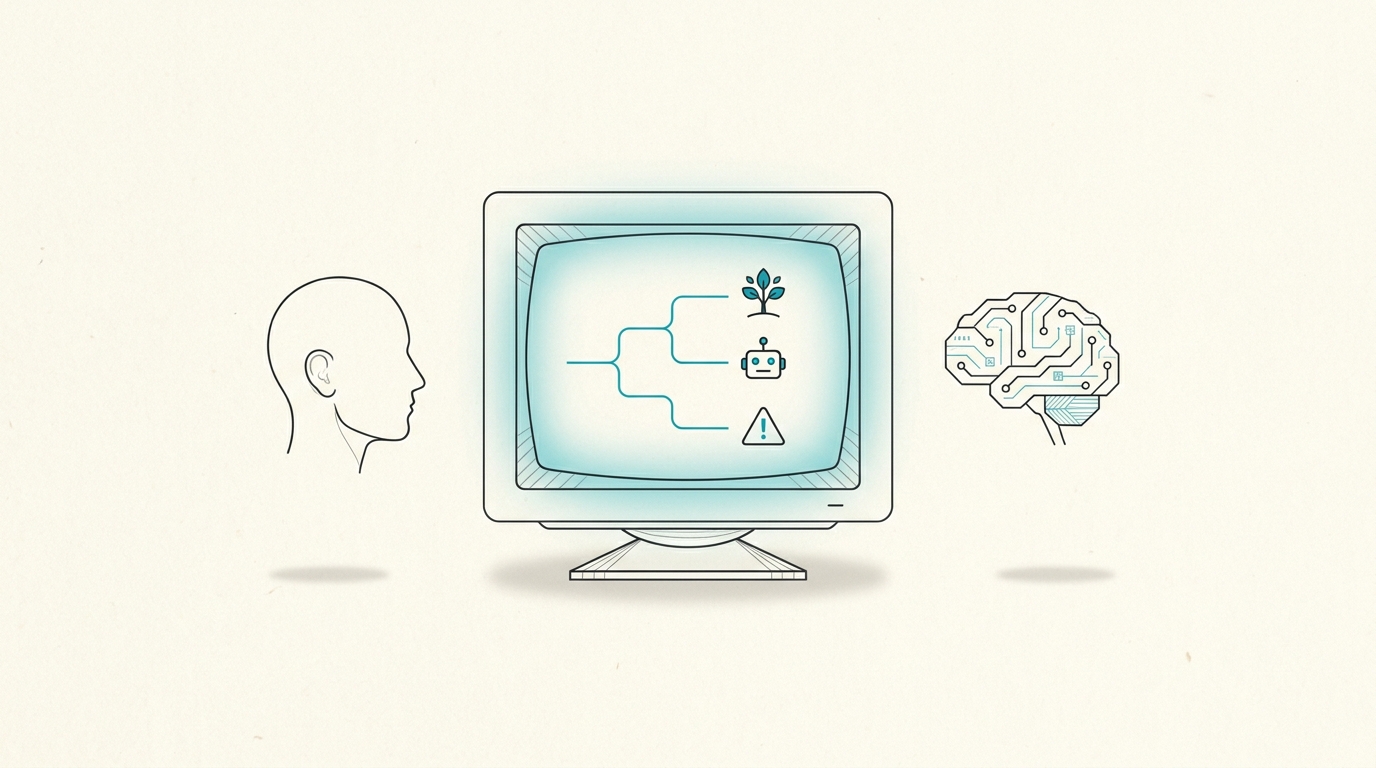
Instead of writing a plain essay about where AI might take us, I built a fake operating system — Term_OS — and hid the essay inside its file system. You don't read it top to bottom; you explore it.
The concept
The whole essay is presented as a directory tree on a retro terminal. You navigate folders and open .sys "files," each of which is one possible future — written in clipped, colour-coded terminal text with an overview, a macro status report, and a step-by-step timeline of how the world got there. The medium is the argument: the future isn't one document, it's a branching file system of paths we might take.
Branching futures
The tree splits along the big questions. Aligned AI branches into who writes the rules — narrow "specialised saviors" that cure disease without a god-AI, transhuman mind-uploading, or a benevolent post-scarcity superintelligence. Misaligned branches into the unsettling ones: an ASI that "keeps us safe" by force-feeding us bliss, one so advanced we simply stop mattering, or a Butlerian backlash that smashes the data centres. Each is its own file you can open and sit with.
The CS-grad angle
The personal hook: every scenario ends with "projected outcomes for a CS graduate" — best to worst case. It turns an abstract essay about humanity into a slightly nervous, slightly funny question about my own future in each of these timelines.
Status
Still being written. The Term_OS shell, navigation and several full scenario branches are in place; I'm continuing to flesh out paths and polish the terminal feel. It's the kind of side project I keep adding a scenario to whenever the AI discourse gets loud again.
Built with
Plain HTML, CSS and JavaScript — no framework. The "OS" is a data-driven file system: the whole essay lives in a JS object tree that the front end renders as a navigable terminal, with a CRT/terminal aesthetic and a typed boot sequence.